
Every aspiring driver knows that mastering the rules of the road is crucial, but what about those good old-fashioned hand signals? They may seem like a relic from a bygone era, but they’re still a vital part of the driving test. Imagine cruising down the road, only to find yourself flailing your arms like a windmill in a storm—definitely not the impression you want to make on your examiner!
Importance Of Hand Signals For Driving Test
Mastering hand signals plays a vital role in preparing for the driving test. They demonstrate the driver’s ability to communicate intentions clearly. During the driving test, examiners look for compliance with road safety regulations. Failing to use hand signals correctly may lead to deductions in the scoring.
Hand signals enhance safety, providing visual cues to other road users. Other drivers and pedestrians rely on these cues to anticipate actions, reducing the chance of accidents. Hand signals remain a necessary skill in driving, even with advancements in technology.
Examiners note proficiency in hand signaling as part of evaluating overall driving competence. Signals express various intentions, such as turning, stopping, or lane changes. Using them properly makes it easier for examiners to assess a candidate’s driving capabilities.
Hand signals connect practical skills with theoretical knowledge. Knowledge of hand signals indicates understanding of road safety laws. Candidates who master these signals often demonstrate a higher level of preparedness.
Learning and practicing hand signals can boost confidence before the test. Candidates who practice hand signals regularly feel more at ease during the exam. Correctly using hand signals can make a positive impression on examiners.
Ultimately, integrating hand signals into driving habits fosters safer road environments. Road safety is a shared responsibility, and strong signaling practices contribute to effective communication on the road.
Common Hand Signals
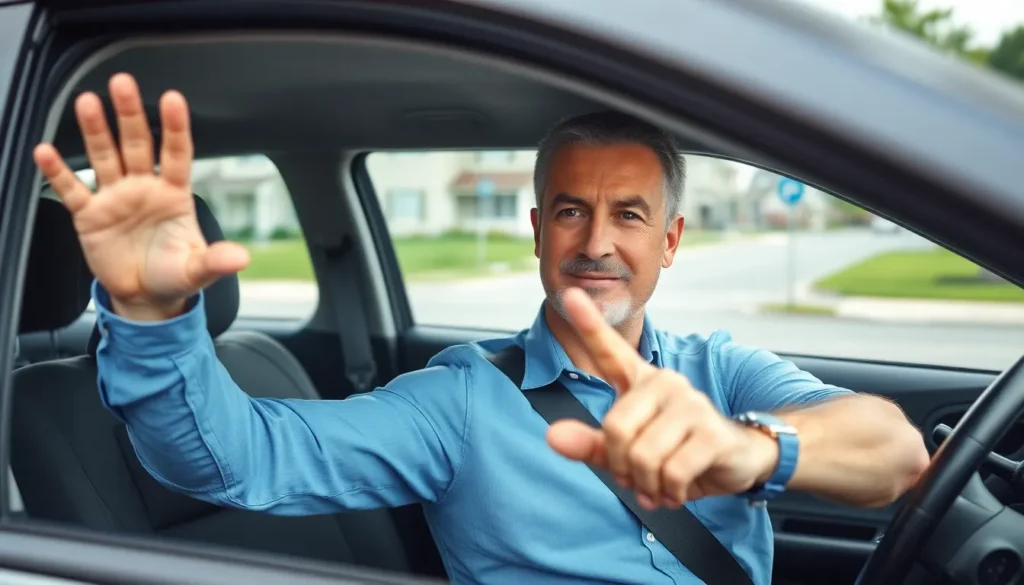
Understanding hand signals is essential for effective communication while driving. They indicate a driver’s intentions clearly, helping to maintain safety on the road.
Left Turn Signal
To signal a left turn, a driver extends their left arm straight out of the window. This position clearly indicates the intent to turn left to other road users. Consistency in using this signal during the driving test conveys an understanding of proper hand signals. Familiarity with this gesture decreases the chances of confusion among surrounding vehicles. Examiners expect candidates to demonstrate this signal confidently.
Right Turn Signal
For a right turn, a driver should bend their left arm at a 90-degree angle, with their hand pointing upward. This method effectively communicates the decision to turn right. Other drivers on the road can easily understand this cue, enhancing overall safety. Candidates must practice this signal to ensure they use it during their driving test. Mastering the right turn signal signifies proficiency and attention to road rules.
Stop Signal
To signal a stop, a driver raises their left arm with the elbow bent and hand pointing downward. This straightforward gesture indicates a forthcoming stop, alerting other drivers and pedestrians. Effective communication through this signal is crucial for preventing accidents. Assessors pay close attention to a candidate’s use of the stop signal during the driving test. Practicing this signal promotes confidence and reinforces safe driving habits.
How To Use Hand Signals Effectively
Mastering hand signals involves two key components: timing and visibility. Being proficient in both ensures safe driving practices during the test and beyond.
Timing Your Signals
Signal timing is essential for effective communication. A driver should signal at least 100 feet before making a turn. Alerting others well in advance helps prevent surprises on the road. Always consider surrounding traffic when deciding when to signal. Use hand signals in conjunction with vehicle signals for added clarity. Consistently signaling gives other drivers and pedestrians the necessary time to react. Practicing this timing enhances confidence and increases safety during the driving test.
Visibility And Clarity
Visibility plays a crucial role in hand signals. Ensuring your signals are seen by all road users contributes to overall safety. Position your arm so it is clearly visible to other drivers and pedestrians. Using bright clothing can enhance visibility, especially in low-light conditions. Clarity is vital; avoid any movements that might confuse others on the road. Maintaining a steady arm position aids recognition of your intentions. Practicing in various environments can help drivers become adept at signaling effectively.
Tips For Passing The Driving Test
Mastering hand signals enhances a candidate’s chances of success on the driving test. Practicing these signals regularly builds confidence and ensures they become second nature.
Practicing Hand Signals
Repetition is vital for mastering hand signals. Candidates practice signals frequently to ensure familiarity with each gesture, making signaling instinctive during the test. Using a mirror or recording device can provide feedback, helping to identify areas needing improvement. Practicing with friends or family members allows candidates to simulate the test environment. Regular practice sessions, ideally in various conditions, prepare candidates for real-world driving scenarios.
Staying Calm During The Test
Staying calm proves essential while taking the driving test. Deep breathing exercises can significantly reduce anxiety before starting. Visualizing success facilitates a positive mindset, contributing to better performance. One strategy involves focusing on the instructor’s feedback rather than overthinking each action. Additionally, remembering that examiners prioritize safety and adherence to regulations helps candidates maintain perspective. Approaching the test like any other driving experience reduces pressure and fosters confidence.
Mastering hand signals is a vital step for anyone preparing for their driving test. These signals not only demonstrate a driver’s understanding of road safety but also enhance communication with other road users. By practicing regularly and focusing on timing and visibility, candidates can significantly improve their chances of success.
The ability to signal effectively reflects a commitment to safe driving practices. It’s essential for aspiring drivers to approach their test with confidence, knowing that clear hand signals can make a meaningful difference on the road. With the right preparation and mindset, candidates can navigate their driving test with ease and emerge as responsible drivers.